


Mastering Indirect Connected Meter Manufacturing: Precision, Safety, and Smart Grid Integration by Londian
The global energy landscape demands precise, reliable, and safe electricity measurement. Standard direct-connected meters often fail for high-consumption sites. This is where the manufacturing of indirectly connected meters becomes critical. Londian, a premier global manufacturer, delivers cutting-edge indirect metering solutions for modern smart grids.
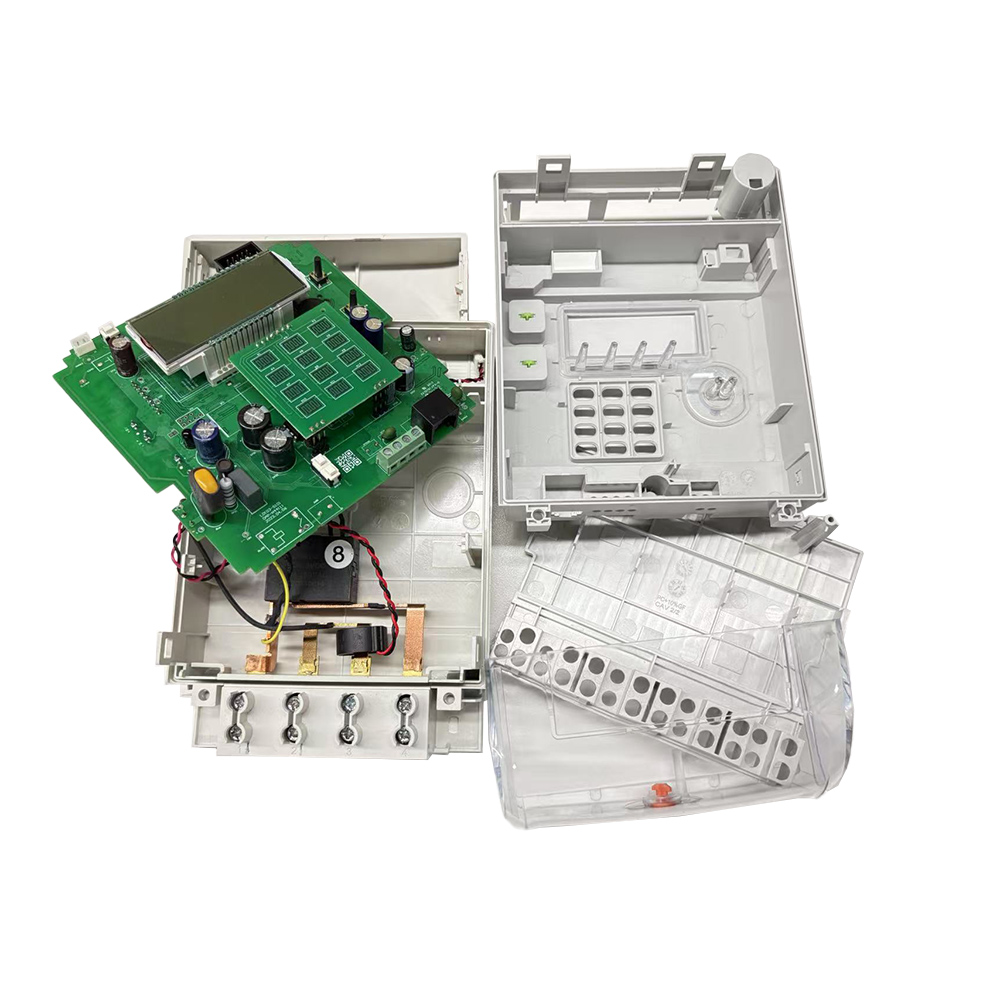
What is an Indirect Connected Meter?
An indirect connected meter measures electricity in high-capacity circuits. Standard meters cannot handle voltages or currents beyond their limits. Therefore, indirect meters rely on external instrument transformers. These include Current Transformers (CTs) y Potential Transformers (PTs). The transformers step down high primary current and voltage. They convert these to standardized, safer levels—typically 5A and 100V. Consequently, the meter itself functions as a low-range, highly accurate device. The system multiplies readings by the transformer ratio. This calculation determines actual consumption.
Key Characteristics:
-
High-Capacity Measurement: Installations above 250 kVA require these meters. Heavy industry, data centers, and substations all benefit.
-
Safety: The transformers isolate the meter from high-voltage lines. This significantly enhances safety for personnel and equipment.
-
Flexibilidad: Users can easily scale measurement capacity. They simply change the transformer ratio.
Why Choose Londian for Indirect Meter Manufacturing?
Londian brings over two decades of industry expertise. Our 50,000㎡ manufacturing facility and dedicated R&D center back this experience. Our approach focuses on precision, compliance, and customization.
1. Technical Precision and High Accuracy
Energy meters must maintain core measurement accuracy. Londian engineers our indirect meters for stringent accuracy classes. We achieve Class 0.5S or Class C under MID standards. This ensures minimal billing errors. Utilities gain reliable revenue protection. Our products feature advanced metrology ICs. These ICs analyze power quality and detect harmonics. They also manage bidirectional energy flow. This proves essential for modern solar and net-metering applications.
2. Global Compliance and Certification
Trusted manufacturers must navigate complex international regulations. Londian holds a comprehensive portfolio of certifications. These include MID (B+D) for European markets. We also comply with IEC 62052-11 y IEC 62053-21/22. Our certifications cover UKCA, KEMA, and STS for global interoperability. Our hardware designs already comply with these standards. Thus, we offer a “plug-and-play” pathway for clients. This reduces certification delays significantly.
3. Advanced Communication and Smart Grid Readiness
Modern indirect meters serve as integral nodes in AMI. Londian integrates seamless communication modules for remote monitoring. We support a wide array of protocols. These include RS485 (Modbus), DLMS/COSEM, LoRaWAN, 4G/Cellular LTE, and PLC. This ensures flawless integration with utility head-end systems. It enables real-time data collection. Utilities can implement load limiting and dynamic Time-of-Use tariffs effectively.
4. OEM/ODM Customization
No two grid infrastructures are identical. Londian offers deep customization for indirect metering solutions. Our OEM and ODM services allow clients to modify hardware and firmware. We also adapt communication interfaces to match regional requirements. For instance, clients can adapt to a specific CT ratio. They can enable prepayment logic via STS. They can also integrate a specific radio frequency module. Our team provides end-to-end support from concept to certified product.
Applications and Future Trends
Indirect connected meters support heavy electrical infrastructure. Industrial plants use them for cost control. Commercial skyscrapers rely on them for accurate tenant sub-metering. Renewable energy sites use them for bidirectional metering. This measures both consumption and grid feed-in. Looking ahead, modularity will drive the future of indirect metering. Londian leads this innovation with modular architecture. Clients can swap out communication modules easily. They can add sensing capabilities like temperature or harmonics. This reduces long-term maintenance costs. It also ensures the meter remains future-proof against evolving grid standards.
Conclusión
Indirect connected meter manufacturing demands sophisticated engineering. It requires stringent quality control and regulatory expertise. Londian stands out as a reliable partner. We combine high-precision engineering with extensive customization. With over 30 million meters deployed globally, we remain committed to innovation. Londian powers a smarter, more efficient energy future.