


Energy Meter RS485: A Comprehensive Guide for Londian Company
Introduction
In today’s energy-conscious world, accurate energy measurement and efficient data communication are crucial for industrial, commercial, and residential applications. RS485 communication in energy meters has emerged as a reliable and robust solution for remote monitoring and data acquisition. For Londian Company, understanding the role of Energy Meter RS485 is essential for optimizing energy management systems, reducing costs, and improving operational efficiency.
This article explores the fundamentals of RS485 in energy meters, its advantages, applications, and key considerations for implementation.
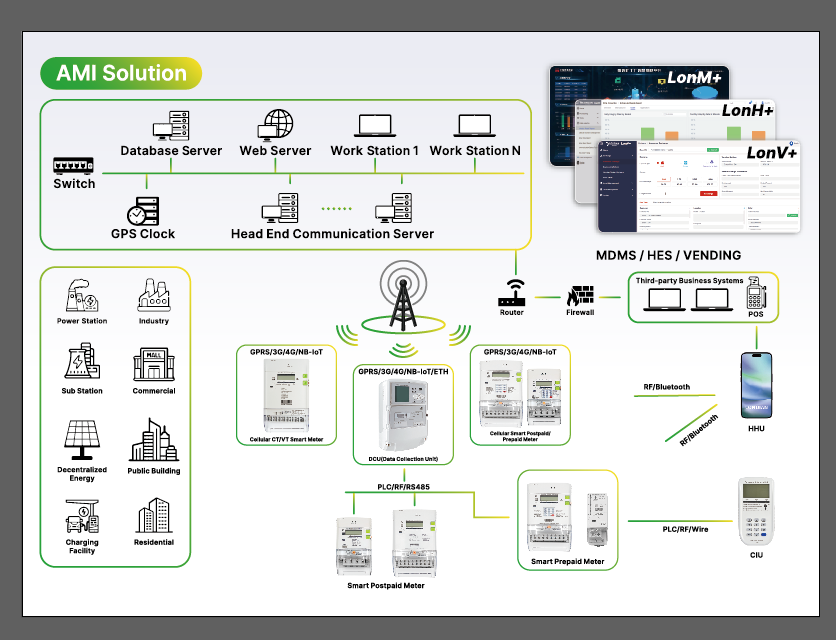
1. What is RS485 Communication in Energy Meters?
RS485 is a serial communication standard that enables multi-point data transmission over long distances with high noise immunity. In energy meters, RS485 facilitates:
- Remote data collection (kWh, voltage, current, power factor)
- Real-time monitoring of energy consumption
- Automated billing and reporting
- Integration with SCADA and IoT platforms
Unlike RS232 (point-to-point), RS485 supports daisy-chain connections, allowing multiple meters (up to 32 devices) on a single bus.
2. Key Benefits of RS485 in Energy Meters
2.1 Long-Distance Communication (Up to 1200 Meters)
RS485 enables stable communication over extended distances without signal degradation, making it ideal for industrial and large-scale installations.
2.2 High Noise Immunity & Differential Signaling
ال balanced differential signaling minimizes electromagnetic interference (EMI), ensuring reliable data transmission in electrically noisy environments.
2.3 Multi-Drop Network Capability
Multiple energy meters can be connected on a single RS485 bus, reducing wiring complexity and installation costs.
2.4 Compatibility with Modbus Protocol
Most RS485 energy meters support Modbus RTU or Modbus TCP, ensuring seamless integration with energy management systems (EMS), PLCs, and cloud platforms.
2.5 Cost-Effective & Scalable Solution
Compared to wireless or fiber-optic alternatives, RS485 offers a budget-friendly yet robust communication method for smart metering.
3. Applications of RS485 Energy Meters
3.1 Industrial Power Monitoring
- Factories, manufacturing plants, and data centers use RS485-enabled meters for load profiling and demand management.
3.2 Commercial Buildings & Smart Grids
- Sub-metering in offices, malls, and hospitals helps track energy usage per tenant or department.
- Utilities deploy RS485 meters for AMI (Advanced Metering Infrastructure).
3.3 Renewable Energy Systems
- Solar/Wind farms rely on RS485 communication to monitor power generation, export, and grid synchronization.
3.4 Residential Energy Management
- Smart homes use RS485 meters for real-time consumption tracking and automated energy optimization.
4. How to Select the Right RS485 Energy Meter?
When choosing an RS485 energy meter for Londian Company, consider the following factors:
| Factor | Consideration |
|---|---|
| Accuracy Class | Class 0.5S (high precision) or Class 1.0 (general use) |
| Communication Protocol | Modbus RTU, Modbus TCP, DLT645, or IEC 62056 |
| Baud Rate | 9600 bps to 115200 bps (higher speeds for faster data transfer) |
| Power Supply | 230V AC or low-voltage DC options |
| Environmental Rating | IP65 for harsh conditions, -25°C to +60°C operating range |
| Certifications | MID, CE, UL, or IEC compliance for regulatory approval |
5. Implementing RS485 Energy Meters: Best Practices
5.1 Proper Wiring & Termination
- Use twisted-pair shielded cables to minimize noise.
- Install termination resistors (120Ω) at both ends of the RS485 bus to prevent signal reflections.
5.2 Addressing & Network Configuration
- Assign unique Modbus addresses (1-247) to each meter.
- Ensure proper grounding to avoid ground loops.
5.3 Software & Data Integration
- Use Modbus-compatible software (e.g., SCADA, Energy Management Systems) for data logging.
- Cloud-based platforms like IoT dashboards enable remote monitoring via MQTT or REST API.
6. Future Trends: RS485 vs. Wireless & IoT Energy Meters
While RS485 remains dominant in industrial metering, emerging technologies like:
- LoRaWAN & NB-IoT (for wireless smart metering)
- Ethernet & Fiber Optic (for high-speed data transfer)
are gaining traction. However, RS485 continues to be the most cost-effective and reliable choice for stable, long-distance energy monitoring.
خاتمة
For Londian Company, adopting RS485 energy meters ensures accurate, real-time energy tracking, seamless integration with existing systems, and cost savings in large-scale deployments. By selecting the right meter, following best installation practices, and leveraging Modbus protocol, businesses can optimize energy efficiency and reduce operational costs.
For more information on RS485 energy meters, contact Londian Company’s technical team today!