


Advanced Metering Infrastructure (AMI): Revolutionizing Utility Management for Londian Company
Introduction
Advanced Meter Infrastructure (AMI) is a cutting-edge technology that enables two-way communication between smart meters and utility providers. For Empresa Londian, adopting AMI can enhance operational efficiency, improve customer service, and optimize energy consumption. This article explores the key components, benefits, challenges, and future trends of AMI, providing a comprehensive guide for utility modernization.
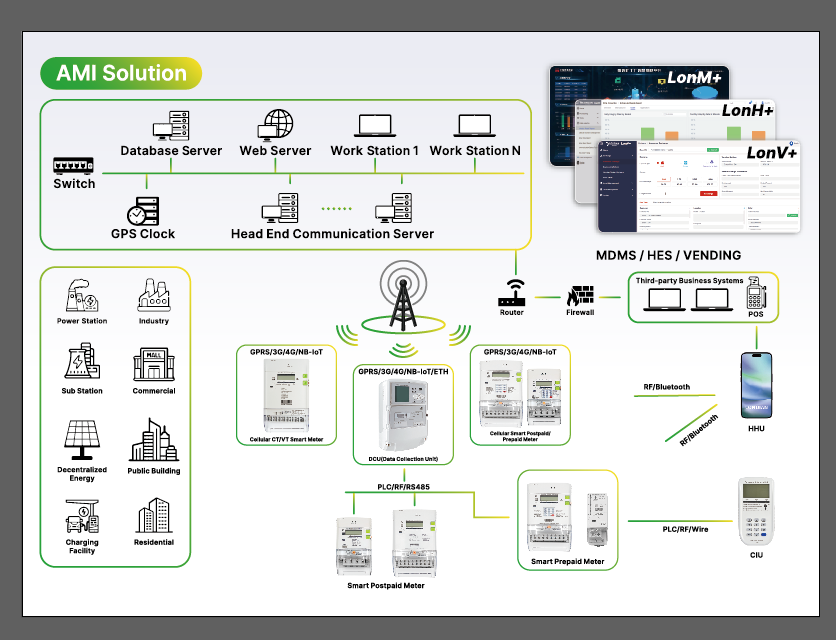
O que é Infraestrutura de Medição Avançada (AMI)?
AMI is an integrated system of smart meters, communication networks, and data management systems that facilitate real-time energy monitoring and automated billing. Unlike traditional metering, AMI provides:
- Real-time data collection – Eliminates manual meter reading.
- Two-way communication – Enables remote meter control and demand response.
- Automated outage detection – Improves grid reliability.
- Dynamic pricing support – Encourages energy efficiency.
For Empresa Londian, AMI ensures accurate billing, reduces operational costs, and enhances sustainability efforts.
Key Components of AMI
1. Smart Meters
Smart meters are digital devices that record electricity, water, or gas consumption at frequent intervals. They transmit data wirelessly to utility providers, eliminating manual readings.
2. Communication Networks
AMI relies on secure communication protocols such as:
- RF Mesh Networks – Ideal for urban areas.
- Cellular Networks – Cost-effective for remote locations.
- Power Line Communication (PLC) – Uses existing electrical wiring.
3. Meter Data Management Systems (MDMS)
MDMS processes and stores meter data, enabling:
- Automated billing
- Energy usage analytics
- Fraud detection
4. Customer Interface Portals
End-users can access real-time consumption data via web or mobile apps, promoting energy-saving behaviors.
Benefits of AMI for Londian Company
1. Operational Efficiency
- Reduces manual meter reading costs.
- Minimizes billing errors.
- Enhances workforce productivity.
2. Improved Customer Satisfaction
- Provides real-time usage insights.
- Enables faster outage resolution.
- Supports flexible billing options.
3. Energy Conservation & Sustainability
- Encourages demand-side management.
- Supports renewable energy integration.
- Reduces carbon footprint.
4. Enhanced Grid Reliability
- Detects faults and outages instantly.
- Optimizes load balancing.
- Prevents energy theft.
Challenges & Solutions in AMI Implementation
1. High Initial Investment
- Solution: Leverage government grants and phased deployment.
2. Data Security & Privacy Concerns
- Solution: Implement encryption and cybersecurity protocols.
3. Interoperability Issues
- Solution: Adopt standardized communication protocols.
4. Customer Resistance
- Solution: Educate users on long-term savings and benefits.
Future Trends in AMI Technology
- AI & Machine Learning Integration – Predictive analytics for energy usage.
- Blockchain for Secure Transactions – Decentralized energy trading.
- 5G Connectivity – Faster and more reliable data transmission.
- IoT Expansion – Smart home and grid integration.
For Empresa Londian, staying ahead of these trends ensures competitive advantage and future-proof infrastructure.
Conclusão
Advanced Meter Infrastructure (AMI) is transforming utility management by enabling real-time monitoring, automated billing, and enhanced grid reliability. For Empresa Londian, adopting AMI means improved efficiency, customer satisfaction, and sustainability. By addressing implementation challenges and embracing future innovations, Londian can lead the way in smart utility solutions.